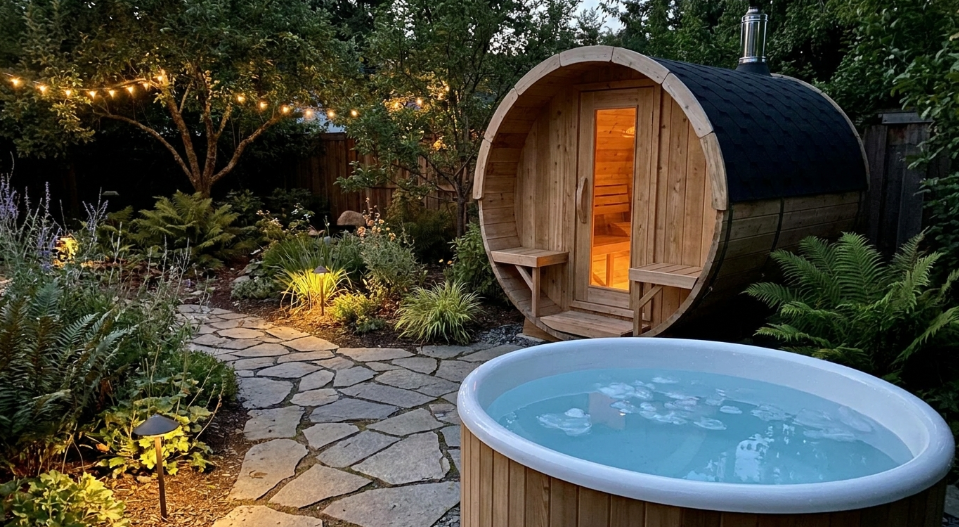
A barrel sauna relies on a low intake vent near the heater and a higher exhaust vent on the opposite wall to create a natural convection loop that pulls in fresh air and pushes out stale, moist air. Get that placement wrong and the cabin heats unevenly, holds excess humidity, and the wood dries out slower between sessions, which shortens its lifespan. The core principle is simple: air should enter low and near the heat source, then exit high and on the far side of the cabin, letting the natural rise of warm air do the circulating work.
Why Ventilation Matters Beyond Just Comfort
Ventilation in a barrel sauna does three jobs at once: it supplies the oxygen a wood-fired heater needs to burn cleanly, it manages humidity so the cabin does not feel stagnant or overly damp, and it helps the wood dry out fully between sessions. Skipping proper airflow does not just make sessions feel stuffier, it accelerates wear on the wood itself, since trapped moisture is what eventually causes staves to warp or panels to develop mildew. A well-vented barrel also heats more evenly, since stale air pockets can create cold spots that make the heater work harder than it should.
Where Should the Intake Vent Go?
The intake vent belongs low on the wall, generally within a foot or two of the floor and positioned near the heater. Cold, fresh air entering at this point gets pulled toward the heater, warms quickly, and rises naturally through the cabin, which is the convection pattern the whole ventilation design depends on. Placing an intake vent up high instead short-circuits this pattern, letting cold air mix with already-warm air near the ceiling rather than feeding the heater’s natural draw, which leaves the room heating less efficiently and less evenly than it should.
Where Should the Exhaust Vent Go?
The exhaust vent sits higher on the cabin wall, usually on the side opposite the intake, so air has to travel across and up through the space before leaving. That path is what actually circulates the room rather than air short-cutting straight from intake to exhaust without doing much work in between. Some barrel designs place the exhaust near the door instead of the far wall, which can work reasonably well since the door itself becomes part of the airflow path when opened, but a true cross-cabin vent layout circulates more consistently session after session.
How Vent Placement Changes Heat Distribution
Even with well-placed vents, a barrel sauna’s curved roof concentrates warm air near the center of the ceiling more than a square cabin does, which is why the top bench commonly runs 15 to 20 degrees hotter than the bottom one in the same session. Good ventilation does not eliminate this gradient, it just keeps it from becoming extreme by preventing stale air from pooling in one spot. Buyers who expect perfectly even heat throughout a barrel, regardless of vent placement, are working from an unrealistic expectation; the goal of proper ventilation is a manageable, predictable gradient, not a flat one.
Wood-Fired Heaters Need an Additional Layer of Venting
An electric heater only needs the cabin’s standard intake and exhaust airflow described above. A wood-fired heater needs that plus dedicated combustion air and a chimney that drafts properly, since it is burning fuel inside or adjacent to the cabin and needs a clear path for smoke and combustion byproducts to leave the structure entirely. A poorly drafting chimney on a wood-fired barrel is not just an efficiency problem, it is a real safety issue, and it is worth having a professional confirm the chimney draws correctly before regular use, particularly on a new installation. Combustion air intake for a wood-fired heater is separate from the cabin’s general ventilation vents and typically sits close to the firebox itself, since the heater needs a steady, direct air supply to burn cleanly rather than pulling scarce oxygen from the same air meant to circulate through the seating area.
How Climate Affects Ventilation Needs
A barrel sauna used in a humid climate needs to work harder at drying out between sessions than one in a dry region, since ambient moisture in the air outside slows how quickly an open door and vents can pull humidity out of the cabin. In consistently damp climates, some owners run a small fan briefly after each session to speed up drying, positioned to push air out through the exhaust vent rather than just relying on passive convection. Cold, dry winter climates generally dry a cabin out faster between uses, though the tradeoff is that vents left fully open in freezing weather can chill the interior enough to slow the next heat-up.
Common Ventilation Mistakes That Hurt Performance
The most frequent mistake is blocking the intake vent with towels, benches, or stored items, which cuts off the airflow the whole system depends on without anyone noticing until the cabin starts heating unevenly. A close second is sealing vents shut entirely during colder months in an attempt to hold heat better, which backfires by trapping humidity and stale air instead. A third common issue is undersized vents relative to the barrel’s volume, more common on imported or budget units where vent sizing was not matched to the cabin’s actual cubic footage.
Checking Vent Specs Before You Buy
Vent size and placement are specifications worth checking on a product listing the same way you would check heater wattage, since an undersized or poorly placed vent affects the sauna’s performance regardless of how good the heater itself is. Specialty retailers, including sweatdecks.com alongside other established sauna sellers, typically list vent dimensions and placement diagrams for each model, which is worth comparing before ordering, particularly if you are choosing between a wood-fired and electric version of a similar barrel design.
Airflow Between Sessions Matters as Much as During
Leaving the door and vents open after a session is the simplest, lowest-cost way to protect a barrel sauna’s wood over time. Trapped moisture after a session, not the heat itself, is the leading cause of warped panels and mildew in wood saunas, so a cabin that gets closed up immediately after use is working against its own longevity. A fully dried-out cabin between sessions also heats back up faster the next time, since the heater is not fighting residual humidity left over from the last use.
Frequently Asked Questions
Where should the intake vent go on a barrel sauna? Near the floor, close to the heater, so fresh air is drawn in and warmed as it rises through the cabin.
Do electric and wood-fired heaters need different ventilation? Yes. Wood-fired heaters need combustion air and a properly drafting chimney in addition to standard cabin airflow.
Why is the top bench always hotter than the bottom one? Warm air rises and pools near the ceiling, and a barrel’s curved roof concentrates that further, often a 15 to 20 degree difference.
How important is it to leave the door open between sessions? Very. Trapped moisture is a leading cause of warped panels and mildew, and open vents and doors dry the cabin out fully.
References
- Cardiovascular and Other Health Benefits of Sauna Bathing: A Review of the Evidence, Mayo Clinic Proceedings, 2018
- Clinical Effects of Regular Dry Sauna Bathing: A Systematic Review, Evidence-Based Complementary and Alternative Medicine, 2018
- Benefits and risks of sauna bathing, The American Journal of Medicine, 2001
- National Fire Protection Association