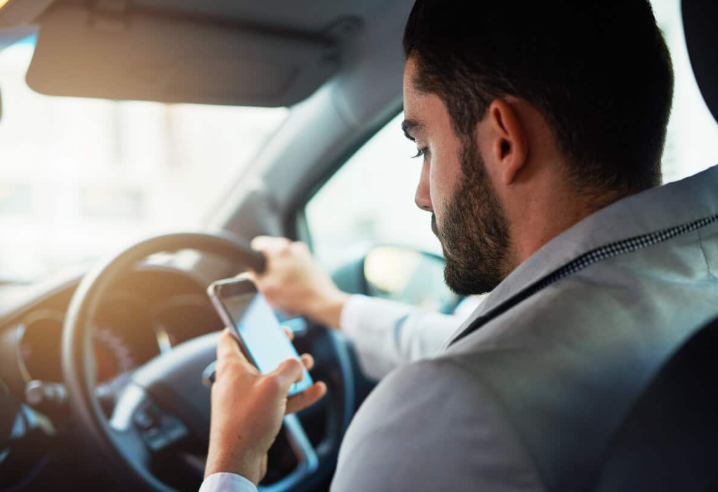
You may already know the crash was not just bad luck. The other driver drifted, braked too late, missed a red light, or never reacted at all, and now you are left with injuries, bills, missed work, and that replay in your head where you keep asking what really happened. In many cases, the answer is simple. The driver was not paying attention. Proving that is the hard part. Ponton Law.
What evidence can prove a distracted driving accident? Usually, it takes a mix of facts rather than one dramatic piece of proof. Phone records, traffic camera footage, witness statements, vehicle data, police findings, and the driver’s own words can all help show that distraction caused the wreck. A car accident lawyer often builds the case by connecting those pieces before records disappear or memories fade.
Distracted driving evidence often disappears fast
A distracted driving crash can look ordinary at first. Rear end collision. Lane departure. Side impact in an intersection. The damage is visible, but the reason behind it is not. That is where many people get stuck. The at fault driver may deny using a phone, deny eating, deny adjusting GPS, deny turning around to deal with a child in the back seat. Without proof, the claim turns into your word against theirs.
The problem gets worse quickly. Surveillance footage may be erased within days. Witnesses move on. Cars get repaired. Cell phone data can be harder to secure if no one requests it early. Even the scene itself changes once skid marks fade and debris is cleared. If you have been wondering whether your suspicion is enough, it usually is not. A legal claim needs evidence that points to inattention and ties that inattention to the collision.
The science behind this is well established. The National Highway Traffic Safety Administration explains distracted driving as any activity that takes attention away from driving, including texting, talking on a phone, eating, using navigation, or adjusting controls. Research from the Virginia Tech Transportation Institute on distracted driving has also shown that visual and manual distractions sharply increase crash risk, especially when a driver looks away from the road for even a few seconds.
Strong proof of driver inattention comes from multiple sources
Phone records are often the first thing people think about, and for good reason. If the driver was texting, calling, or using apps at the time of impact, those records can support your claim. They do not always tell the whole story, though. A phone record may show activity near the time of the crash but not the exact moment, and some distractions have nothing to do with a phone.
Video can be even stronger. Traffic cameras, business security systems, dash cams, and doorbell cameras sometimes capture a driver looking down instead of ahead. In a lane drift case, footage may show a vehicle rolling across the center line without braking. In a rear end crash, video may show no attempt to stop until the last second. That kind of evidence is hard to explain away.
Witness statements matter more than people expect. A passenger, another driver, or someone standing nearby may have seen the driver holding a phone, eating, turning around, or ignoring traffic. Police observations also count. An officer may note that the driver admitted checking a text, seemed confused, or gave an explanation that does not fit the physical evidence.
Your own photos and records can help prove a distracted driving accident claim too. Damage patterns, road conditions, the position of the vehicles, and the lack of skid marks can all support the argument that the other driver was not paying attention. Modern vehicles may also store event data showing speed, braking, and steering input in the seconds before impact. If a driver never hit the brakes, that can say a lot.
Different types of evidence carry different weight
| Evidence Type | What It Can Show | Common Challenge |
|---|---|---|
| Cell phone records | Calls, texts, app use near the time of the crash | May need legal steps to obtain and interpret |
| Traffic or security video | Driver looking down, lane drift, delayed reaction | Footage can be deleted quickly |
| Witness statements | Phone in hand, distracted behavior, crash sequence | Memories fade and contact info gets lost |
| Police report | Admissions, officer observations, citations | Officer may not have seen the distraction directly |
| Vehicle event data | Braking, speed, steering before impact | Vehicle must be preserved and downloaded properly |
| Scene photos and damage | Point of impact, no evasive action, crash dynamics | Needs context from other evidence |
No single item guarantees success. A text timestamp with no witness may leave room for argument. A witness with no supporting records may face pushback. When several pieces line up, the claim becomes much stronger. That is often how proof of distracted driving is built in a real case.
Immediate steps can protect your distracted driving accident case
1. Preserve every piece of evidence. Save photos, videos, medical records, repair estimates, and messages about the crash. Write down what you remember while it is fresh. If you noticed the other driver looking down, holding a phone, or failing to react, record that detail now.
2. Identify cameras and witnesses right away. Look for nearby stores, homes, intersections, and parked vehicles that may have recorded the collision. Get names and contact information for witnesses before they disappear. Fast action matters because many systems overwrite footage in days.
3. Get legal help before records are lost. A personal injury lawyer can send preservation letters, seek phone and vehicle data, review the police file, and work with experts if needed. That can be the difference between a suspicion and a case backed by evidence.
Clear evidence gives you a fair chance to recover
If you were hit by a driver who was texting, scrolling, eating, or simply not watching the road, your frustration makes sense. These crashes feel preventable because they are. The right evidence can show what happened and why it happened, which puts you in a stronger position to pursue payment for medical care, lost income, and the disruption this crash has caused. If you suspect distraction played a role, speak with a personal injury lawyer as soon as you can and protect the proof before it is gone.